Five Halves, Five Old Walls: Reading Oxford's Pubs Like Buildings
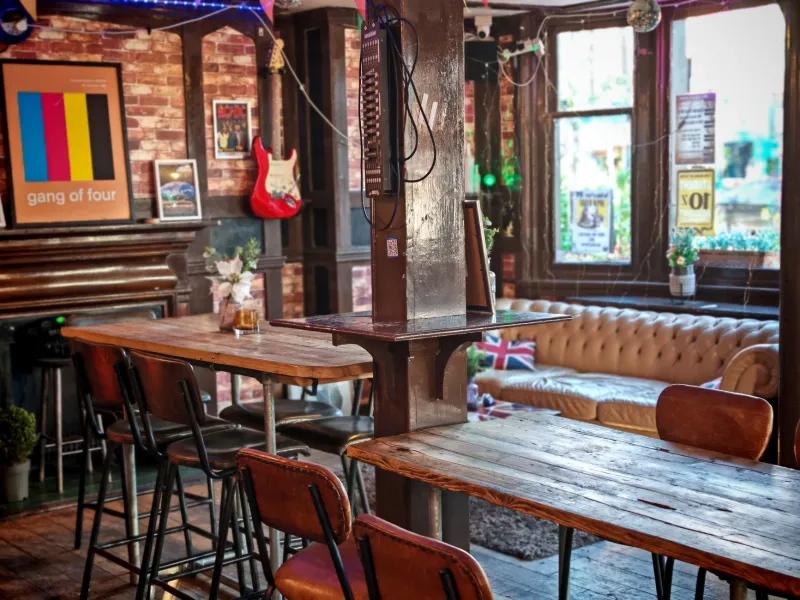
Most pub crawls are organised around volume. This one is organised around joinery. Five pubs, all within a fifteen-minute walk of each other in the middle of Oxford, each picked for a single detail you can see for free while holding a half you paid about three quid for. It is a good wet-weather plan, a decent solo plan, and a sensible way to spend a weekday afternoon when the colleges are shut to visitors and the tour groups have gone to lunch.
Before you set off
Budget around £15 to £18 for five halves in 2026, depending on what you drink. Order halves rather than pints: the point is to arrive at the fifth pub still able to read a datestone. Allow 20 to 25 minutes per stop, so two and a half hours in total, plus walking.
Go on a weekday between noon and four if you can. Saturdays after one o'clock in this part of town are a contact sport, and Sunday lunch turns the last two stops into a standing-only affair. Opening hours in Oxford pubs shift with the seasons and with the student calendar, so check each one on the day rather than trusting a listings site that was last updated in the spring.
The route runs west to north: Alfred Street, then Bath Place, Holywell Street, Broad Street, and finally St Giles. About 1.2 miles all in, and mostly flat.
Stop one: The Bear, Alfred Street
Start here because it is the oldest and because it opens obligingly early. The Bear's licence is usually dated to 1242, which makes it a strong claimant to the title of Oxford's oldest pub, and the building has been doing this job for so long that the floor has simply given up on being level.
Look up: the ceiling and upper walls, which are covered in a dense layer of clipped ties. Landlords have been snipping neckties off customers since the 1950s, and the result is a fabric archive of half a century of bad decisions in menswear. There are also framed fragments of college and regimental ties, which rewards five minutes of close reading.
Look down: the threshold and the passage in from the street. The wear on the step tells you how narrow the entrance has always been, and the two small ground-floor rooms show you the original footprint before anyone thought about open-plan drinking.
Stop two: The Turf Tavern, Bath Place
Out of Alfred Street, right along Holywell, then down the alley. The Turf is the one everybody photographs, and it deserves it. The building dates from the thirteenth century in parts and sits against a surviving stretch of the city wall, which you can see from the lower garden.
Look up: the roofline. Nothing in this pub is quite straight, and the upper wall of the passage leans in a way that makes structural engineers go quiet. In summer the wisteria does most of the work; in November the timber and the sagging plaster are the attraction.
Look down: the cobbles, the drainage channel, and the several unexpected changes in level between the bar and the back rooms. This is a building that grew rather than was designed, and your ankles will notice.
A half here costs more than at the Bear, largely because you are paying for the courtyard. Drink it inside in winter. The low rooms with the fires lit are the reason to come off-season anyway.
Stop three: The King's Arms, Holywell Street
Cross back up Holywell for the most straightforwardly handsome pub on the route. The King's Arms went up in 1607 as a coaching inn, and it is now owned by Corpus Christi College, which is why it wears that pale cream and black paint scheme and looks slightly as though it belongs in a different, more prosperous century.
Look up: the jetty. The first floor projects out over the pavement, supported on the timber frame, which was a standard way of gaining floor space in a street where you could not build outwards. Stand across the road and the overhang is obvious; stand underneath it and you get a good sense of how narrow the medieval street line was.
Look down: the flagstones and the general hump of the floor, which has settled around whatever was originally underneath it. Also look at the doorways, which are lower than modern ones and have been worn into curves.
Stop four: The White Horse, Broad Street
A short walk brings you to the smallest stop on the list. The White Horse has a frontage barely wider than a bus shelter and a history going back to the seventeenth century, though the building has been altered so often that the dates get slippery. It works perfectly as a fifteen-minute stop.
Look up: the windows. Small panes, deep reveals, and glass that has clearly been replaced piecemeal over decades. Then look at the ceiling, which is near enough to touch.
Look down: the floor, and specifically the way the whole room tilts towards the street. There is also a cellar hatch worth spotting, because it explains why the bar sits where it does.
This is a standing-up pub. Embrace it. You are two-thirds of the way through and the half should be small.
Stop five: The Lamb and Flag, St Giles
Finish at the top of the route, on St Giles, where the Lamb and Flag has stood since 1613. It is Grade II listed, owned by St John's College, and was known in the nineteenth century as the Bucket of Blood on account of the bare-knuckle boxing that went on in the back room. That is the sort of history you can quietly enjoy without a guided tour.
Look up: the front elevation. Small first-floor windows, a hanging sign that has been repainted many times, and a roofline that sits lower than its neighbours in a way that makes the building look older than its 1613 date suggests.
Look down: the entrance passage and the gutter running along the front. Then find the fire, which in cold weather is the entire point of the stop.
Reading walls instead of beer boards
A few general things to look for as you go. Brick size tells you roughly when a wall went up: older bricks are thinner and more irregular. A jettied upper floor means a timber-frame date. Worn thresholds and steps tell you where the original door was, which is often not where the current one is. Painted signs that have been overpainted three times are worth a second look at an angle.
And the cheapest trick of all: stand on the opposite pavement and look at how the pub meets its neighbours. Buildings that grew slowly never quite line up with the ones beside them, and Oxford is full of these small misalignments.
Finishing up
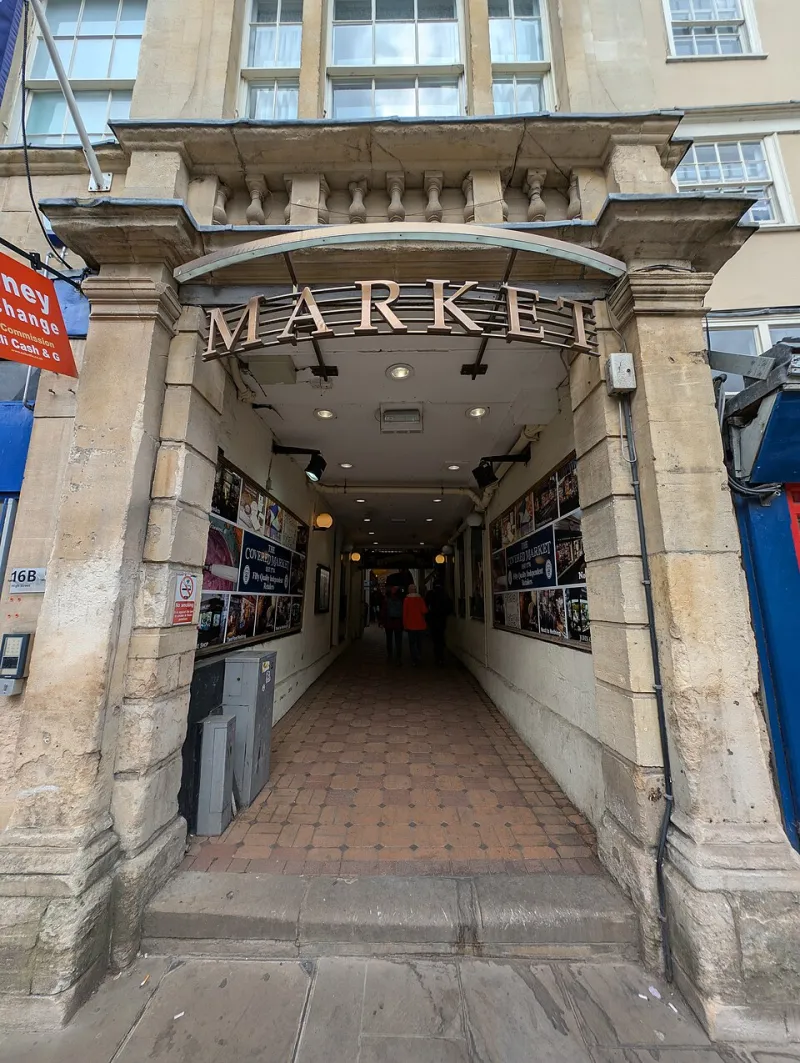
You end on St Giles with the natural options of walking down into Jericho, cutting through to the Covered Market for something cheap and substantial, or simply calling it a day. Five halves over two and a half hours is a gentle afternoon, not a session, which is the point. The pubs will still be there next week, and so, more or less, will the walls.