Four Roofs, One Wet Afternoon: An Indoor Oxford Route That Actually Works
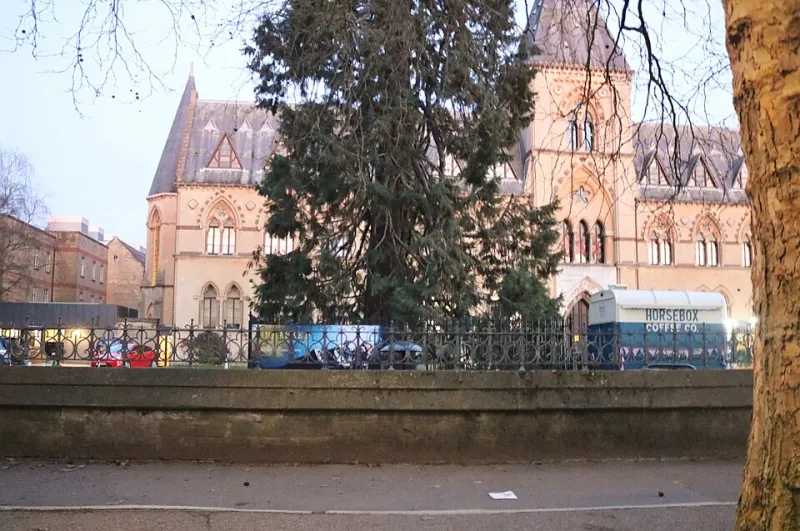
Photo: David Howard , CC BY-SA 2.0, via Wikimedia Commons
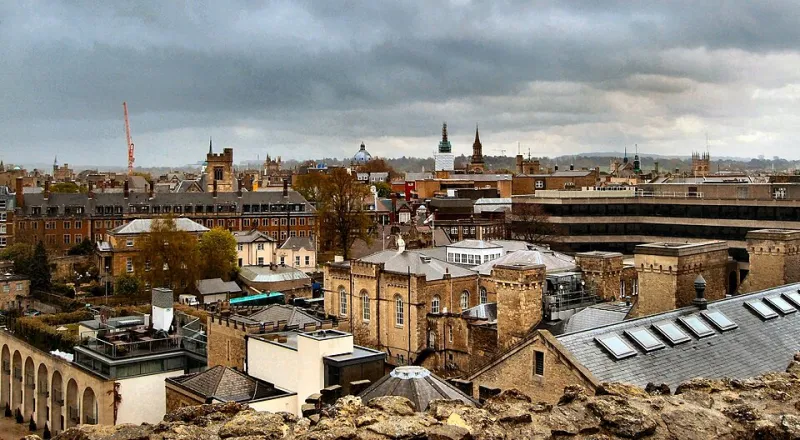
Oxford rain doesn't arrive with drama. It settles in, turns the pavements into mirrors, and makes every chain coffee shop look like a refugee camp. The good news is that the city has a ready-made antidote: a compact arc of museums and libraries where you can spend a wet afternoon moving between roofs, glass cases and dinosaur bones without ever looking like you've given up.
This route starts at the Weston Library on Broad Street, runs south-east to the Ashmolean, then north up Parks Road to the Oxford University Museum of Natural History and the Pitt Rivers. All four permanent collections are free. The outdoor walking is under a mile in total. And yes, there is lunch.
The route at a glance
- Start: Weston Library, Broad Street
- Second stop: Ashmolean Museum, Beaumont Street
- Lunch: Ashmolean Rooftop Restaurant or café
- Third stop: Oxford University Museum of Natural History, Parks Road
- Fourth stop: Pitt Rivers Museum, entered through the natural history museum
- Outdoor walking: roughly 0.8 miles, mostly flat
- Cost: free entry to all four permanent collections; special exhibitions may be ticketed
Check current opening times before you set out — Oxford's museums are generally generous, but winter hours can be shorter, and the Weston's Treasures gallery sometimes has its own rhythm.
10:30 — Weston Library: start with the treasures
The Weston Library is the Bodleian's modern, glass-fronted sibling on Broad Street, and its Treasures gallery is the perfect wet-weather opener. It's free, it's compact, and it gives you the satisfying feeling of having seen something significant before you've even taken your coat off properly. You'll find manuscripts, maps, literary fragments and the kind of objects that make you say 'oh, that's the actual thing' out loud, slightly too near a display case.
Give it 30 to 45 minutes. Don't try to read every label. The gallery is small enough that a slow lap is better than a scholarly crawl. When you leave, turn left along Broad Street, cross towards St Giles, and head down Beaumont Street. The Ashmolean is about a five- to seven-minute walk. It's the only bit of the route where you'll need your umbrella out for more than a moment.
11:20 — Ashmolean: one floor, not all of it
The Ashmolean is free, vast, and quietly ruthless about time. If you attempt the whole thing you'll still be there at closing, hungry and slightly resentful. Pick a lane. The Egyptian galleries on the ground floor are a reliable crowd-pleaser; the top-floor paintings are calmer; the Chinese and Indian collections reward a slower look. Whatever you choose, commit to about 90 minutes and then stop.
Special exhibitions are ticketed, so check before you promise anyone a blockbuster. The permanent collection is the real bargain: no ticket, no queue anxiety, just a lot of very good objects in sensible rooms.
13:00 — Lunch without leaving the loop
The Ashmolean's Rooftop Restaurant is the obvious midpoint. It's not a secret, and it's not cheap, but it is warm, central and has views over the dreaming spires rather than a queue for a paper cup. Book ahead if you're in a group or visiting at a weekend. If you want something quicker and cheaper, the museum café downstairs does the job. Either way, you avoid the grim pantomime of standing in a chain coffee shop with a wet coat and nowhere to sit.
If you'd rather save your money for a proper pub later, eat lightly here and hold out for dinner. The route doesn't require a heavy lunch. It requires dry feet and a bit of stamina.
13:45 — The walk to Parks Road
Leave the Ashmolean, turn right onto Beaumont Street, then right again up St Giles. Keep going until you reach Parks Road on your right. The walk to the natural history museum is about 10 to 12 minutes at a normal pace. It's flat, straightforward and — this is the important bit — the only proper soaking of the day. Use the crossing, keep your hood up, and remind yourself that the next two stops are under the same roof.
14:00 — Oxford University Museum of Natural History: bones, bugs and a whale
The Oxford University Museum of Natural History is free, gloriously Victorian and full of things that make children stop mid-sentence. Dinosaurs, insects, rocks, a dodo, and a central court that feels like a cathedral for people who like fossils. Give it 45 to 60 minutes. The ground-floor displays are the easiest win, but the upper gallery is quieter and gives you a good view of the whole absurd, beautiful room.
14:45 — Pitt Rivers: the attic of the world
The Pitt Rivers Museum is entered through the natural history museum — follow the signs at the rear — and it is one of Oxford's great strange places. Free, dim, densely packed and deliberately old-fashioned in its display style, it's the kind of museum where you look up and realise you've been standing in front of a case of ceremonial masks for ten minutes without blinking. Give it an hour if you can. The lower floor is immediate and dramatic; the upper gallery is where the really odd, beautiful and uncomfortable stuff lives.
If the rain stops: spend your last hour here
If the skies clear while you're in the Pitt Rivers, don't rush off. The upper gallery is the room worth your remaining hour: it's quieter, darker and far less crowded than the ground floor, and it rewards a slow, curious wander. If you've already done that, the upper balcony of the natural history museum is a good second choice — you get the bones from above and a bit of peace. And if it's genuinely dry, University Parks is across the road for a short, muddy victory lap.
Practical bits
- Toilets: all four venues have them; the Ashmolean and natural history museum are the easiest with children.
- Bags: large rucksacks may need to be carried in front or left at cloakrooms; check at each entrance.
- Access: the Ashmolean, Weston and natural history museum have step-free routes; the Pitt Rivers is older and tighter in places, so check ahead if mobility is a concern.
- Cost: free entry to all permanent collections. Bring a card for lunch and any special exhibitions.
- Best for: proper wet autumn and winter afternoons, not just a passing shower. If the rain is torrential, skip the outdoor walk and take the bus up St Giles.
Oxford doesn't stop for rain, and neither should your afternoon. Four roofs, one loose arc and a sensible lunch are all you need to turn a washout into a decent day out.