Limbo in the Spires: A Practical Plan for Oxford’s 2026 Between-Days
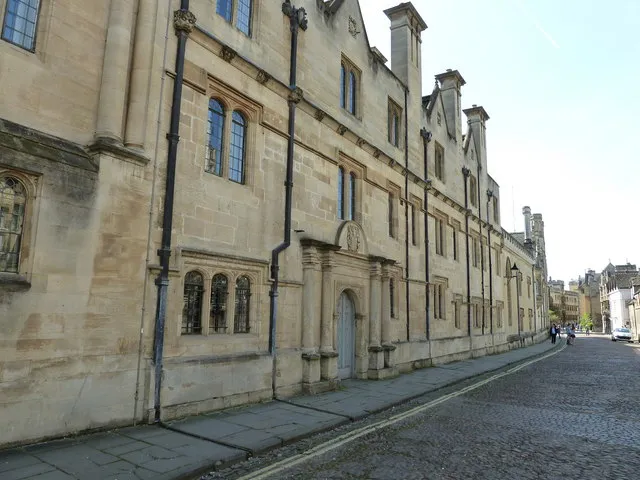
Photo: Basher Eyre , CC BY-SA 2.0, via Wikimedia Commons
Oxford between Christmas and New Year is not quite Oxford. The festive lights are still up, the streets are emptier than usual, and half the city seems to be operating on a rota known only to managers and porters. It can be a lovely time to be here — quiet courtyards, no queue for coffee, a pub fire with actual space around it — but only if you plan around the fact that normal rules are suspended.
This is not a promise that every door will be open. Opening hours in the between-days move about, and any guide that gives you exact times for 2026 is guessing. What follows is the pattern: what usually runs, what usually doesn’t, and how to avoid the classic mistake of turning up somewhere lovely to find a locked gate and a handwritten note.
First, get the rhythm of the week right
In 2026, Christmas Day falls on Friday 25 December. Boxing Day is Saturday 26 December, with the substitute bank holiday on Monday 28 December. New Year’s Eve is Thursday 31 December, and New Year’s Day is Friday 1 January 2027.
That shape matters. The weekend immediately after Christmas can feel busier than expected, especially in pubs and on the roads, while Monday 28 and Tuesday 29 often settle into a strange, low-key calm. By New Year’s Eve, the city centre picks up again — not quite normal, but not sleepy either.
Treat the whole stretch as a series of reduced Sundays rather than a festival. That is the most useful mental adjustment you can make.
Colleges: assume the gate is the exception
Most Oxford colleges are not visitor attractions in the between-days. They are working institutions with staff on holiday, students away, and porters protecting the quads. Some colleges close to casual visitors entirely; others keep limited hours or charge for entry; a few may allow access to specific parts if you have booked or are attending a service.
The safe approach is simple: do not build a day around getting inside a college unless you have checked its own website or phoned the lodge. Even then, treat it as a bonus rather than the main event.
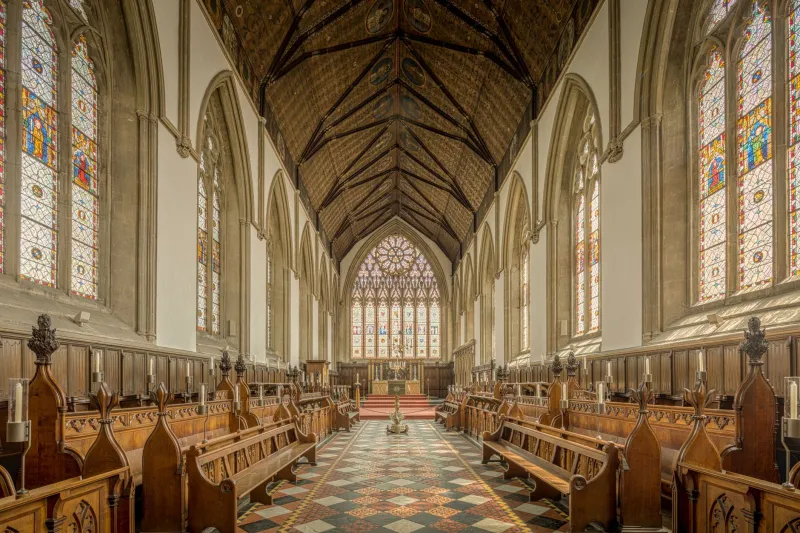
What you can do is walk the outside. The lanes around Christ Church, the back ways near Merton and Corpus, the quiet stretch by New College — these are still free, still beautiful, and often better without a crowd. If a chapel is open for a service, you are welcome to attend quietly, but it is not a sightseeing slot.
Museums and galleries: the reliable core
If you want one certainty in an uncertain week, head for the big museums. The Ashmolean, the Oxford University Museum of Natural History, the Pitt Rivers and the History of Science Museum often keep something close to normal hours between Christmas and New Year, though many close on Christmas Eve, Christmas Day and Boxing Day, and some run shorter days.
Check each museum’s website on the morning you plan to go. Book free tickets where they are offered. Go early, because the natural history museum in particular fills up with families by mid-morning, and the Pitt Rivers is far more pleasant before the pushchairs arrive.
Smaller museums are a different matter. Many shut for the entire week. Do not assume that a favourite little gallery will be open just because it usually is on a Tuesday.
Pubs, cafés and the meal without a booking
Pubs are your best bet for a proper meal, but they are not immune to the week. Boxing Day and New Year’s Eve are booking nights. Between those, many pubs run shorter kitchen hours, a reduced menu, or stop serving food earlier than usual.
The trick is to eat earlier. Aim for 12pm or 2.30pm rather than 7pm. If you have not booked, ring ahead — not to reserve, but to ask whether the kitchen is actually running and whether they have space. A pub that is open for drinks may not be serving food at all.
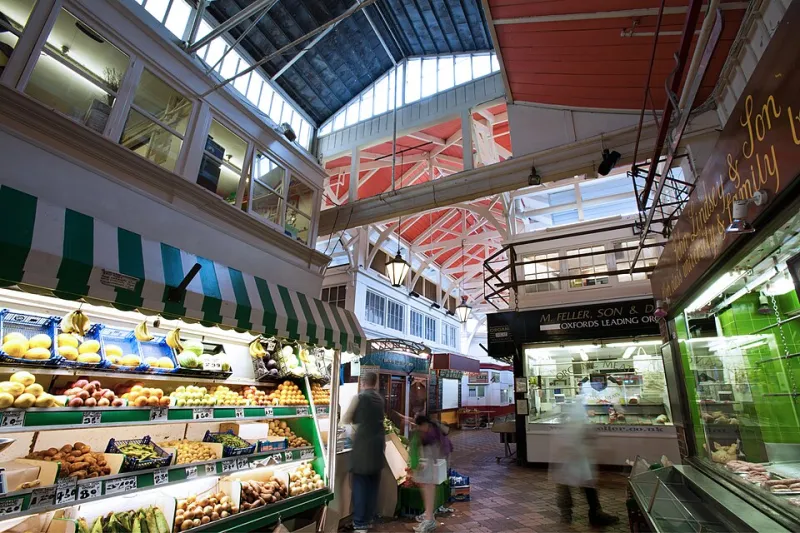
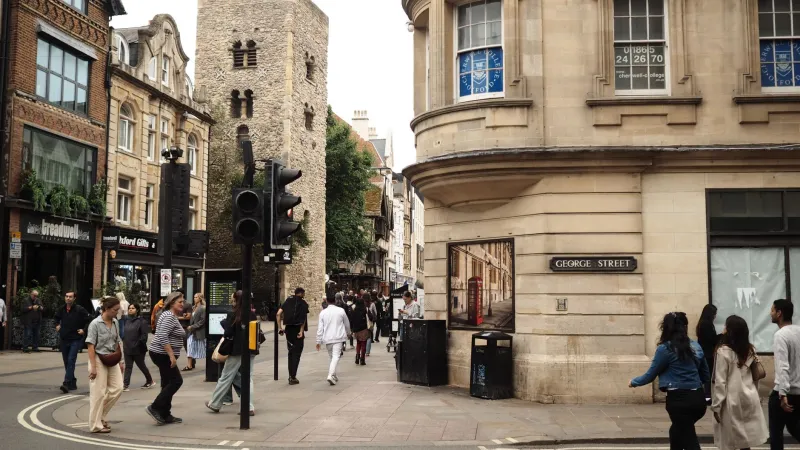
The Covered Market is mixed. Some traders close for the whole week; others open late and shut early. Chain cafés around Cornmarket and George Street are usually open, though they can be busy with shoppers. Independent cafés are more likely to be shut between Christmas and New Year, so do not make a pilgrimage to a specific one without checking.
Supermarkets are another useful anchor. Many open reduced hours on Boxing Day and Monday 28 December, and some smaller stores close entirely. Buy picnic supplies early if you are planning a canal walk or a day out.
Shops: expect the split
Chain shops usually open, sometimes with Sunday hours. Independent shops often close for the week or open only for a few days. The Covered Market is a good example of the split: a few stalls trade, many do not, and the atmosphere is odd but not unpleasant.
Do not plan a serious shopping trip for 27 or 28 December. If you need groceries, go early. If you want a browse, treat it as a bonus rather than the purpose of the day.
Transport and streets: quieter, but not simple
Buses generally run a Saturday or Sunday service, with reductions on bank holidays. Park-and-ride sites can be quieter than usual, but some run reduced hours or close on Boxing Day and New Year’s Day. Trains run between the days, but engineering works are common over the Christmas period, so check before you travel.
The city centre is at its quietest from 26 to 28 December. By 30 and 31 December it fills up again, especially in the evening. Pavements can be wet, icy or both, so wear shoes with grip rather than something fashionable and useless.
Taxis are scarce on New Year’s Eve. If you are going out, decide how you are getting home before you have your first drink.
A realistic between-days plan
Day one: a big museum in the morning, a pub lunch at 12.30, and an early walk around the empty streets. Day two: an exterior college walk, the Covered Market if it is trading, and a café stop that you have checked is open. Day three: a canal or riverside walk if the weather is dry, with a picnic from a supermarket. New Year’s Eve: an early dinner, a quiet pub, and home before the taxi rush.
That is not a week of non-stop excitement. It is a week of small, reliable pleasures — which is exactly what the between-days are good for.
What to avoid
Avoid turning up at a college expecting a tour. Avoid assuming a museum is open because it was open last year. Avoid leaving dinner to 7pm on New Year’s Eve without a booking. Avoid planning a day around one independent café or shop. And avoid trusting any opening-hours listing that has not been updated for 2026.
The honest summary
Oxford between Christmas and New Year is a low-key city break, not a festival. Check three things each morning: the museum website, the pub kitchen hours, and the bus timetable. Then go slowly, keep your plans loose, and enjoy the rare version of Oxford that has space to breathe.