Beyond the Postcard: Six Oxford Colleges Where You'll Actually Find Some Peace
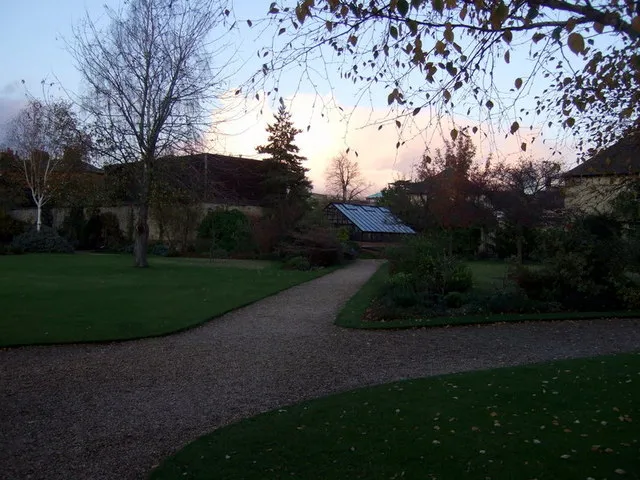
Photo: ceridwen, CC BY-SA 2.0, via Wikimedia Commons
There is a particular kind of Oxford afternoon that I've grown fond of, and it doesn't involve a queue. It goes like this: you pick one college that nobody has heard of, walk into a quad that holds maybe four other people, sit on a bench for twenty minutes, and leave feeling like you've been somewhere rather than merely photographed it.
The famous colleges earn their fame, but the city has more than thirty of them, and the second tier is where the good stuff hides. What follows is a personal shortlist — architectural quirks, gardens, the practicalities of getting in, and a café and a walk to pair with each. Opening arrangements change with term dates and exam periods, so always treat what's below as a starting point and confirm with the lodge or the college website before you set out.
Corpus Christi: the smallest, and the most argued-over
Tucked off Merton Street, Corpus is tiny — around two hundred and fifty students — and its front quad is dominated by the Pelican sundial, a painted pillar covered in dials, mottoes and more information than any sundial has a right to carry. Stand in front of it and try to work out how many different readings it can give you; it's a better puzzle than most of what's on your phone.
The college also holds one of the oldest libraries in the country, though visitor access is limited and often by arrangement. Corpus generally opens to visitors on weekday afternoons for a modest charge, and closes entirely during exam periods.
Afterwards: the Covered Market is three minutes away — Colombia Coffee Roasters for a flat white, then a loop up the High and back through Merton Street, which is the prettiest street in Oxford and permanently empty at four in the afternoon.
Lincoln: the one people walk past
Halfway along Turl Street, wedged between Exeter and Jesus, Lincoln has a front door so discreet that visitors regularly miss it. Inside, the chapel has a fine ceiling and a small, hushed quality that makes it one of the best places in the city to sit still for ten minutes. The eighteenth-century library is a beauty, but it isn't generally open to tourists.
Access is genuinely restricted here — Lincoln is one of several colleges that limits visitor entry to particular hours, and sometimes closes to the public altogether outside them. Ask at the lodge politely and accept the answer; the porter is not being difficult, they are following a rota.
Afterwards: cross the road to the Missing Bean on Turl Street, take the coffee into the churchyard at St Michael at the North Gate, and then walk up to Cornmarket for the cheapest view in Oxford — the tower of St Michael's, if it's open, gives you the city's roofs for a couple of pounds.
Pembroke: Wren's first building, and a garden nobody mentions
Pembroke is where Samuel Johnson spent a miserable year or so, and the college that gave Christopher Wren his first commission: the chapel, which he designed while still a young man. It's small, beautifully proportioned, and almost always empty. The gardens behind are more generous than the frontage suggests, with a lawn and a quietly overgrown feel in winter.
Pembroke keeps short visitor hours — typically weekday afternoons — and asks for a small fee. Don't expect to wander into the chapel during a service or a rehearsal; the sound of an organ being tuned through an open door is a perfectly good substitute.
Afterwards: walk down to the Oxford Union and then cut through to St Michael's Street for the Handlebar Cafe, a bicycle workshop with excellent cake. From there, it's five minutes into the centre or a pleasant loop back along George Street.
Worcester: the garden college
Worcester is the answer to the question 'where do I go when I want grass?' It has a lake, a broad lawn, a terrace of Georgian houses by Nash, and a row of medieval cottages that look like they've wandered in from a Cotswold village. In summer it's used for plays; in late autumn it's simply quiet, with the lake reflecting whatever light there is.
Visitor access is usually weekday afternoons with a small entry charge, and the gardens are the main event. This is one to save for a dry, crisp day rather than a wet one.
Afterwards: you're in Jericho, which means Little Clarendon Street. Common Ground for coffee, a browse in the secondhand shops on Walton Street, and then the canal towpath north towards Wolvercote if you've got another hour in you.
Wadham: the one that feels like a proper square
Wadham, founded in 1610, has one of the most satisfying front quads in Oxford: a broad, level square with a chapel on one side and a hall on the other, built to a design that makes you want to stand in the middle and turn slowly on the spot. It's also unusually relaxed about visitors, with free entry during published hours and a garden at the back that most people never reach.
Because it's free and central, it catches some of the foot traffic from the museums — go early in the day and you'll have it to yourself.
Afterwards: cross Parks Road into the University Parks, which close at dusk but are glorious in the middle of the afternoon in November. For coffee, head back towards Broad Street and the café at the Weston Library — a slightly hidden room that's become a favourite for working locals.
Mansfield: the outsider
Mansfield College, up on Mansfield Road, was founded for nonconformists and only became a full college of the university in 1995, which gives it a different atmosphere from the medieval foundations. The chapel by Basil Champneys is the reason to come: a soaring, red-brick, Arts-and-Crafts space with a famous window, quite unlike anything else in Oxford.
It sits at the edge of the University Parks and is generally open during the day, free of charge, with none of the visitor machinery of the central colleges.
Afterwards: the Parks are on your doorstep, and a walk through them towards the Cherwell and Mesopotamia is one of the loveliest half-hours in the city. Coffee afterwards means a short walk west into Jericho.
The etiquette bit
A few things that keep these doors open. Always check the website or the lodge board first; colleges close for exams, for conferences, for private events and for no reason at all. Pay the entry charge where there is one — it funds the gardens you're enjoying. Don't photograph students, don't walk on lawns marked private, and don't treat a chapel as a museum if someone is praying in it. If a door is shut, it's shut.
And if you want to see these places at their most open, look out for Oxford Open Doors in September, when dozens of buildings waive their usual rules for a weekend.
The headline colleges will still be there next year. The quiet ones will be there this afternoon, and they'll be empty.